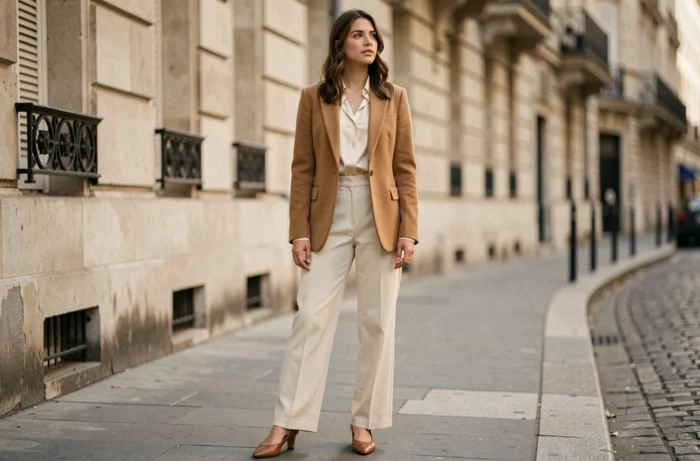
Opening your wardrobe on a changing season morning and realizing you have a lot of clothes, but few outfits that work: this situation is common. Current women’s fashion is no longer just about piling up trendy pieces. We now build a wardrobe by combining new purchases, second-hand items, rentals, repairs, and resales, which radically changes the way we follow trends.
Women’s Wardrobe: Alternating New, Second-Hand, and Rentals Daily
Buying a dress for a wedding, wearing it once, and then letting it hang on a hanger for three years: this pattern is losing ground. We rent the event piece, buy a structured blazer second-hand that we will wear every week, and reserve the new budget for basics whose cut and material justify a full price.
This is not purely an ecological choice. The Zalando 2025 report It Takes Many shows that the savings made and the cost of living motivate as much as the environment. We repair a pair of jeans with a seam that has come undone, resell a coat that is too small, and recover part of the investment to finance the next piece.
Following fashion on Mam’Zell Plume allows you to spot combinations of pieces that work without multiplying purchases. The idea is not to give up the pleasure of dressing but to spread your budget across several channels instead of just one.
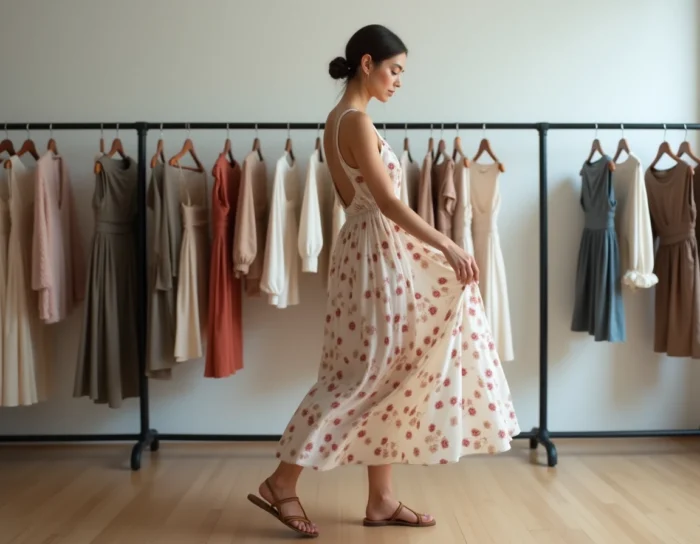
Women’s Fashion Trends: The Pieces That Circulate Best Between Channels
Not all trends lend themselves well to this rotation. A garment that is easy to resell or rent meets specific criteria that competitors rarely address.
- Classic colors (black, navy, off-white, beige) retain their resale value much longer than a strongly seasonal color. A beige trench coat bought new resells for half its initial price after two seasons, while a fuchsia model loses most of its value.
- Fabrics resistant to dry cleaning and washing (thick wool, twill cotton, genuine leather) can withstand multiple owners. Low-quality polyester pills quickly and complicates resale.
- Timeless cuts are exchanged more easily than very dated silhouettes. Wide, fluid trousers or a straight midi skirt find buyers on second-hand platforms even two or three years after their purchase.
In practice, we can follow the color trends spotted on the runways (red, leather, mini lengths) while keeping a base of neutral pieces that circulate between purchase, wear, resale, and replacement.
Fashion Regulation and Fast Fashion: What is Changing in France and Europe
The new-second-hand-rental rotation does not arise in a vacuum. The legal framework is also pushing in this direction, and constraints are coming quickly.
Since July 19, 2026, the ESPR prohibits large companies from destroying unsold clothing (with exceptions for hazardous or counterfeit products). For brands, this means clearing stocks differently: clearance sales, donations, recycling. For consumers, this mechanically increases the supply of discounted or refurbished pieces on the market.
On the ultra-fast fashion side, France has voted on a law whose ban on advertising and promotion by influencers will apply from January 1, 2027. Brands that renew their collections at an extreme pace will see their online visibility reduced. For those who follow fashion trends via social media, sources of inspiration will shift towards content creators more focused on sustainable style.
The “green” arguments are also becoming more regulated. The new European rules against greenwashing limit vague environmental claims on labels and in campaigns. We will see fewer mentions of “eco-friendly” without proof, which should clarify the landscape for buyers.

Creating a Current Style: A Concrete Method for a Mixed Wardrobe
We have the channels, we have the regulatory constraints. The practical question remains: how do we dress with all this?
Define Three Categories in Your Wardrobe
Mentally separating your clothes into three blocks helps to see clearly. The first groups the basics bought new for their quality (a good pair of raw jeans, a wool sweater, a winter coat).
The second contains trendy pieces acquired second-hand or through rentals (an oversized leather jacket spotted on the runways, a flowy long dress for the warm season). The third gathers accessories and small pieces with a high turnover rate, those that we easily resell or exchange.
Adopt a Realistic Seasonal Rhythm
Two to three new pieces per season are enough to refresh a wardrobe if we choose them based on what we already own. We check what is missing, not what looks good in the window. Color trends (the red seen everywhere, the powdery tones of spring) are integrated in small touches – a scarf, a bag, a pair of shoes – rather than through a complete renewal.
Opinions vary on this point: some find that such a measured pace limits creativity, while others notice that it forces them to better combine their pieces. The result mainly depends on the variety of cuts and textures already present in the wardrobe.
Current women’s fashion rewards those who think in systems rather than accumulation. A garment that circulates, from purchase to resale through repair, costs less per use than a new garment worn three times. Trends come and go, style remains – as long as a solid base has been built that absorbs each novelty without forcing the wardrobe to overflow.