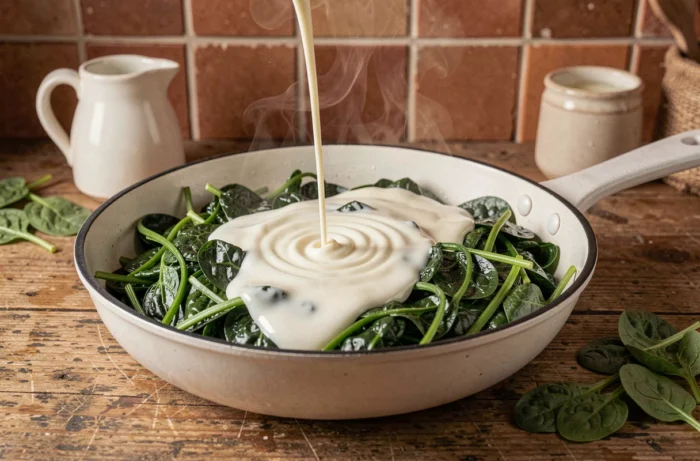
Spinach loses up to half of its volume during cooking. This reduction releases a quantity of water that, if not managed properly, turns the dish into a greenish mush. Adding a dairy product (milk or cream) not only serves to soften the taste: the choice between the two modifies the final texture, the behavior under heat, and the presentation of the dish on the plate.
Oxalates and boiling: what happens before the milk or cream
Even before choosing between milk and cream, the initial cooking of the spinach determines the outcome. Spinach contains oxalates, compounds that give a slight astringency in the mouth and limit calcium absorption by the body.
Boiling water followed by careful draining reduces the oxalate content much more effectively than steaming. According to Jardiner Malin, steaming leaves more oxalates in the vegetable, while boiling water dissolves them into the cooking liquid, which is then discarded.
This pre-treatment changes the game for what comes next. Blanched and drained spinach will better welcome cream or milk, without excess residual water that would dilute the sauce. Skipping this step risks creating a watery mixture where neither milk nor cream can fulfill their role.
To successfully cook spinach, this blanching phase should be considered the true starting point, not an option.
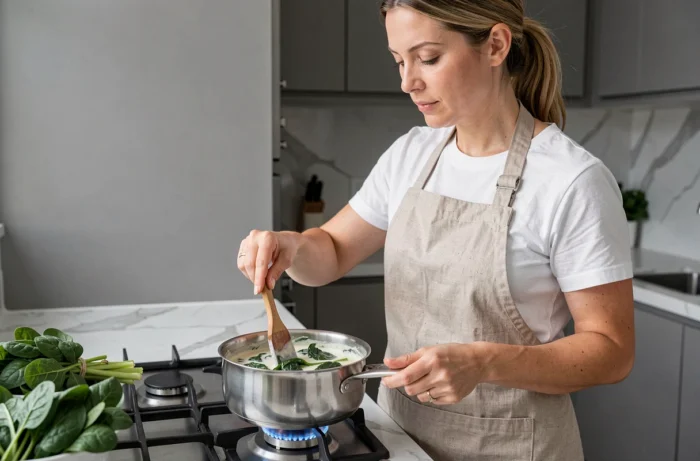
Fresh cream in spinach: texture, consistency, and behavior when hot
Thick fresh cream (about 30% fat) provides a rich coating that envelops each leaf. In a pan or pot, it gently reduces and forms a short, dense sauce that clings to the spinach without running off the plate.
Liquid cream, being less fatty, behaves more like milk. It yields a lighter result but requires a longer reduction to thicken. If the heat is too high, it can separate and leave an unappetizing greasy film on the surface.
When to prefer cream
- For a standalone side dish, served alone alongside meat or fish, where the sauce needs to hold without spreading
- For gratin preparations (with grated cheese, for example), as the fat in the cream withstands oven cooking well
- For recipes where spinach is mixed with eggs, such as a quiche or a gratin, where the cream stabilizes the binding
Cream masks the natural bitterness of spinach more effectively. This is an advantage for sensitive palates, but a disadvantage if one seeks the bold vegetal flavor of the vegetable.
Milk in spinach: lightness and impact on flavor
Milk contains much less fat than cream. It produces a more fluid sauce that allows the herbaceous flavor of spinach to shine through rather than covering it. The result is more reminiscent of a vegetable fondue than a sauced dish.
Milk has a technical drawback: it separates more easily due to the residual acidity of the spinach. To avoid this, it should be added at the end of cooking, off the heat or over very low heat, and not allowed to boil for long in contact with the vegetable.
When milk works better
In a homemade béchamel intended to coat spinach, milk is the logical choice. The flour cooked in butter (the roux) stabilizes the milk and prevents separation. This results in a creamy béchamel sauce without the heaviness of cream.
Milk is also suitable when spinach accompanies pasta. The sauce remains light, clinging to the pasta thanks to the cooking starch, and the dish does not become cloying. Adding a handful of grated cheese (parmesan, comté) compensates for the lack of roundness without weighing it down.
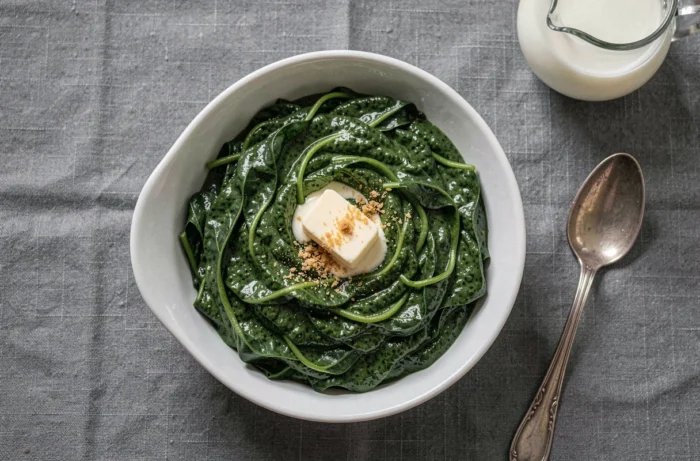
Storing cooked spinach: the nitrate trap
Regardless of the choice between milk or cream, storage after cooking deserves special attention. Cooked spinach contains nitrates that can convert to nitrites under the action of bacteria, especially if the dish cools slowly at room temperature.
Jardiner Malin recommends never leaving cooked spinach sitting on the countertop. The best practice is to cool the dish quickly (in a cold water bath or spread out in portions) and then place it in the refrigerator within an hour. Consumption should occur within 24 hours.
This point also applies to leftovers from spinach gratin or quiche. Reheating a dish that has been out of the cold for too long does not eliminate the nitrites already formed.
Comparison table of milk and cream for cooking spinach
| Criterion | Thick fresh cream | Whole milk |
|---|---|---|
| Final texture | Short, coating sauce | Fluid, light sauce |
| Flavor of spinach | Muted by fat | Preserved, more pronounced |
| Heat stability | Good, withstands the oven | Fragile, risk of separation |
| Typical use | Gratin, standalone side, quiche | Béchamel, pasta, velouté |
| Key tip | Add during cooking, reduce over medium heat | Add at the end of cooking or stabilize with a roux |
The choice between milk and cream depends on the target dish and the desired texture, not on a universal rule. A spinach gratin with eggs and cheese calls for cream. Lightly sauced spinach to accompany fresh pasta works better with milk. In both cases, pre-blanching and draining remain the true key to a clean result, without excess water or bitterness.