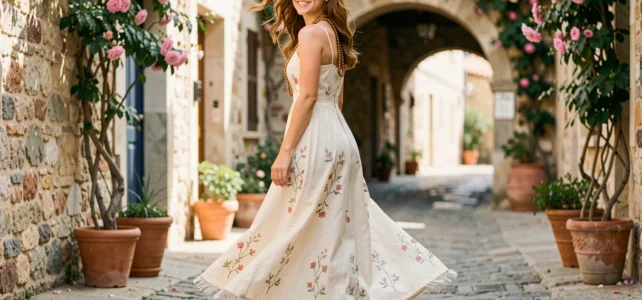
Finding a fringed suede jacket in a thrift store, wearing it over raw jeans with low-heeled ankle boots: that’s often how the bohemian style begins. A randomly found piece sets the tone for an entire wardrobe. Bohemian fashion is not just about long floral dresses worn at festivals. In 2026, it becomes more structured, urban, and gains depth with darker color palettes and less obvious cuts.
Bohemian Fashion Fall 2026: Game-Changing Colors and Cuts
Boho is spontaneously associated with cream, beige, and ecru tones. The fall-winter 2026 collections break this habit. Several trend analyses (Who What Wear, woman&home) indicate a rise in deep blues, burgundies, forest greens, and even blacks crafted in a style close to gothic romance.
In practical terms, this means you can wear a bohemian blouse in burgundy or pine green with black flowy pants and still remain perfectly in style. Boho 2026 moves away from being exclusively summer and festival-oriented to become a wardrobe suitable for the office or city, with more structured pieces.
The materials follow this evolution. Corduroy, soft leather (or its plant-based equivalent), and thick knits replace the light fabrics of summer. Floral and paisley prints are retained, but on dark backgrounds.
A bohemian dress with patterns on a black background worn with a leather belt and flat ankle boots gives a very different result from the beach cliché.
To delve deeper into these evolutions and find updated outfit ideas, you can check the Bohème Magazine website which documents these variations season by season.
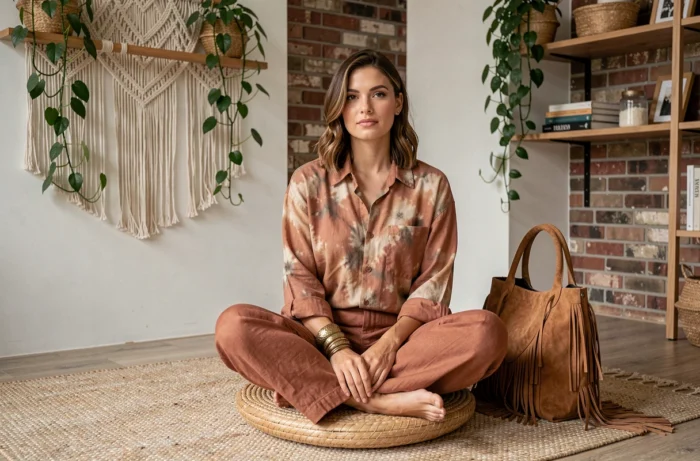
Second Hand and Unique Pieces: The True Driving Force of the Boho Look
The bohemian style has always valued uniqueness. In 2026, this philosophy aligns with a broader movement: second hand becomes the natural channel for building a bohemian wardrobe. Vintage pieces provide exactly what boho seeks: a story, a texture, an embraced imperfection.
The resale fashion market has seen significant growth in recent years. For a bohemian look, thrift stores or resale platforms offer a concrete advantage: you avoid mass-produced pieces that everyone wears to the same festival.
- Vintage suede or leather jackets are easily found second hand and age better than new ones. Check the condition of the seams at the shoulders and underarms before purchasing.
- Long printed dresses from the 90s and 2000s are making a strong comeback. Favor viscose or cotton fabrics over polyester, which pills quickly.
- Handcrafted accessories (woven belts, natural stone jewelry, raffia bags) immediately add a bohemian touch to a neutral outfit. One strong accessory is enough.
Returns vary regarding the quality of vintage pieces depending on the platforms. It’s best to touch the fabric in a physical store when possible, or rely on sellers with detailed photos and a clear return policy.
Chic Bohemian Outfit for Everyday: Three Combinations That Really Work
The problem with boho style is the risk of veering into costume territory. Too many fringes, too many layers, too many patterns, and you lose readability. A successful bohemian look relies on a single strong piece surrounded by basics.
Bohemian Dress and Structured Leather
A long floral-printed dress (dark background for the season) worn with a fitted leather jacket and round-toed ankle boots. The leather provides structure, while the dress adds movement. Avoid adding a fringed bag; a simple smooth leather crossbody bag is sufficient.
Jeans and Flowing Blouse
A straight or slightly flared jean, a loose blouse with puffed sleeves partially tucked into the pants. The jeans anchor the outfit and prevent a “costume” effect. Add a woven belt and dangling earrings. This is an outfit suitable for the office or weekend, depending on the chosen shoes.
Midi Skirt and Bohemian Knit
A midi skirt in velvet or flowy fabric with a chunky knit sweater and boots. This combination works particularly well with the autumnal burgundy and green palettes highlighted by the 2026 collections. A printed scarf tied to the bag replaces the more predictable layered necklace.
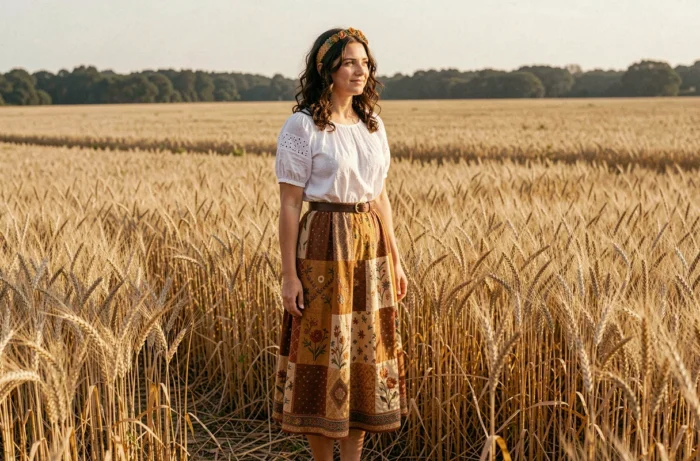
European Textile Regulation: What Changes for Bohemian Brands
You don’t think about it when buying an embroidered skirt, but bohemian fashion brands are directly affected by the new European obligations. Since 2025, separate textile collection has been implemented in the European Union. The introduction of extended producer responsibility and the upcoming digital product passport will impose increased traceability.
For consumers, this means that bohemian pieces sold by European brands will gradually need to display information about their composition, origin, and recyclability. Small artisan brands, which make up a significant part of the boho offering, will need to adapt to these requirements.
This regulatory framework naturally pushes towards second hand and sustainable pieces. A well-chosen bohemian garment, made from natural materials and with careful finishes, becomes an investment rather than a disposable purchase. Linen, thick cotton, and genuine leather age well and gain character over time.
Boho 2026 no longer resembles that of the 2010s. Darker, more structured, more rooted in a thoughtful consumption approach, it remains true to its founding principle: to assemble pieces that tell a story, rather than following a seasonal uniform.