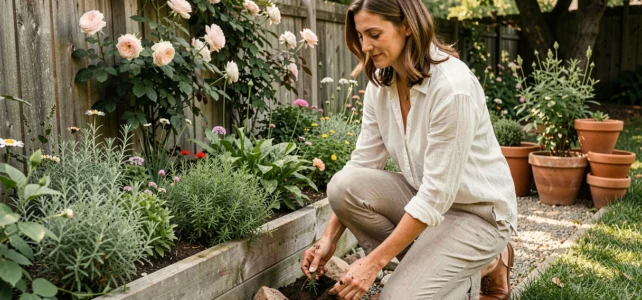
Transforming a garden into a functional living space requires measuring what differentiates sustainable landscaping from decorative assembly. Sun exposure, soil type, regulations on outdoor lighting, and plant choices according to climate zone: each parameter impacts the final result. This article compares the main landscaping options and their technical constraints to guide your decisions.
Outdoor garden lighting: regulatory constraints and technical choices
Most articles on garden landscaping treat lighting as a simple aesthetic choice. French regulations impose specific limits that directly condition the type of fixtures that can be used.
The decree of December 27, 2018, on light pollution, fully applicable since 2020, regulates outdoor installations visible from public space, including on private properties. Three technical constraints shape the choice of garden lighting:
- Maximum color temperature of 3000 K for standard outdoor lighting, reduced to 2700 K in sensitive areas and 2400 K near astronomical observation sites.
- The luminous flux directed towards the sky must remain below 1% of the nominal output of the fixture, effectively excluding spotlights aimed at the canopy.
- A luminous flux density ceiling applies depending on the zones, between 25 and 35 lm/m².
In practice, these rules steer towards warm white string lights and fixtures, with light directed towards the ground or low surfaces. Garden lighting that complies with this regulation naturally creates a subdued ambiance, more consistent with a nighttime living space than cold, diffuse lighting.
To explore outdoor decoration approaches that integrate these constraints, a useful resource: https://www.lejardinierdecorateur.com/ offers solutions tailored to different garden configurations.
Garden zoning: comparison of configurations by use
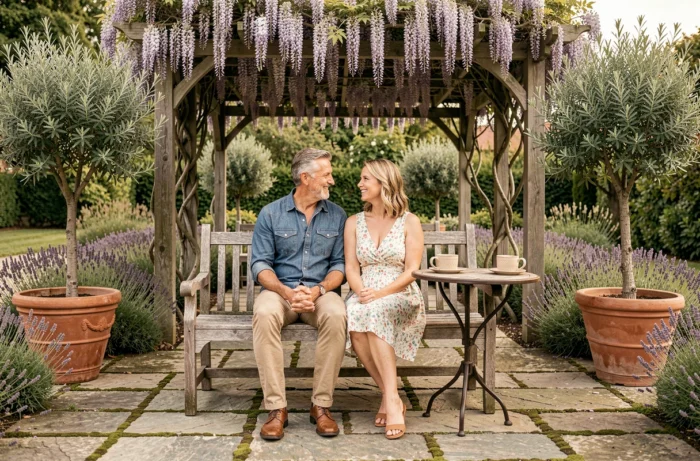
A harmonious garden relies on a division into distinct zones, each serving a specific purpose. The table below compares four common configurations based on their technical requirements.
| Zone | Recommended Exposure | Suitable Covering | Annual Maintenance |
|---|---|---|---|
| Dining area / terrace | Semi-shaded (southwest) | Concrete slab, composite wood, natural stone | Moderate (cleaning, treatment) |
| Relaxation / reading area | Shaded (north, under tree) | Grass, stabilized gravel | Low |
| Vegetable garden | Full south (min. 6h sun) | Bare soil, mulching | High (watering, rotation) |
| Children’s play area | Partial shade | Reinforced grass, wood chips | Moderate (safety, replacement) |
Sun exposure determines the function of each zone, not the other way around. Placing a vegetable garden in the north or a terrace in full sun without protection creates an unusable space for part of the year.
The choice of covering directly influences the maintenance load. Composite wood, for example, requires less treatment than natural wood but costs more to purchase. Natural stone ages better than tinted concrete, which can discolor after a few seasons.
Creating transitions between zones
Low plant borders, level changes, or trimmed hedges serve as visual separations without partitioning the space. A successful transition guides the eye without creating a break.
Border plants (lavender, boxwood, ornamental grasses) play a dual role: they delineate spaces and enrich the visual field. The choice of plants depends here on the climate zone and soil type, two parameters to check before any purchase at a nursery.
Plants and landscaping: adapting plants to soil and climate
The common reflex is to choose plants for their appearance, then try to make them survive. The reverse approach yields better results: starting from the existing soil and microclimate to select the plants.
Clay soil retains water and is suitable for hydrangeas, irises, or willows. Sandy, draining soil favors lavender, rosemary, and Mediterranean grasses. Planting without knowing the nature of your soil is like betting on the survival of the plants.
Structuring flower beds by layers
A plant bed gains visual depth when it layers three strata: ground cover in the foreground, medium shrubs in the middle, and a tree or large grass in the background. This organization creates a sense of volume even in a small garden.
Perennials reduce the replanting work from year to year. However, they require regular pruning to maintain their shape and prevent them from suffocating their neighbors.
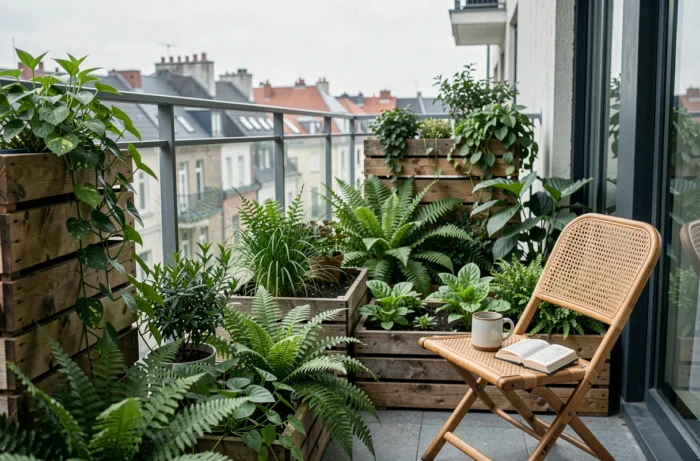
Decorative elements (pots, raised planters, trellises) allow for the introduction of plants in areas without full soil. Raised planters also provide an ergonomic advantage for gardening, limiting awkward postures.
Furniture and decorative elements for an outdoor living space
Garden furniture conditions the actual use of the space. A poorly sized garden lounge relative to the terrace creates a feeling of clutter. Conversely, an overly empty space lacks function.
The furniture must correspond to the available surface and the intended uses. A table for four people occupies about the same footprint as a low lounge with two armchairs, but does not meet the same need.
The materials of the furniture interact with the local climate. Aluminum withstands moisture but heats up in the sun. Treated wood withstands the elements but requires annual maintenance. Woven resin offers a good weight/resistance compromise, with a shorter lifespan if exposed to UV without protection.
Garden shed and storage
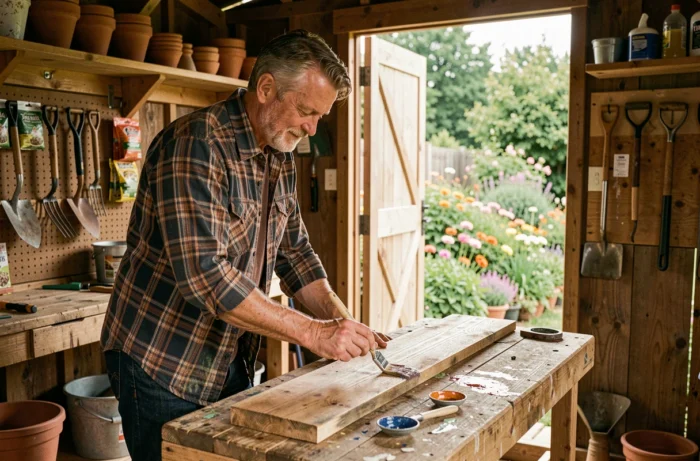
A garden shed serves both for storing tools and protecting furniture in winter. Its ground area, depending on the municipality, may require a prior declaration of work or a building permit. Checking local urban planning rules before installation avoids administrative complications.
A garden that functions as a living space relies on measurable technical choices: exposure, soil, compliant lighting, and plants suited to the climate. The coherence between these parameters produces harmony, more than the accumulation of decorative elements. The last point to decide often remains the annual maintenance budget, which varies significantly depending on the type of covering and the chosen plant density.